Apendix III: Card Anatomy
This section presents an anatomy of each card type. Player cards are detailed first, followed by encounter cards.
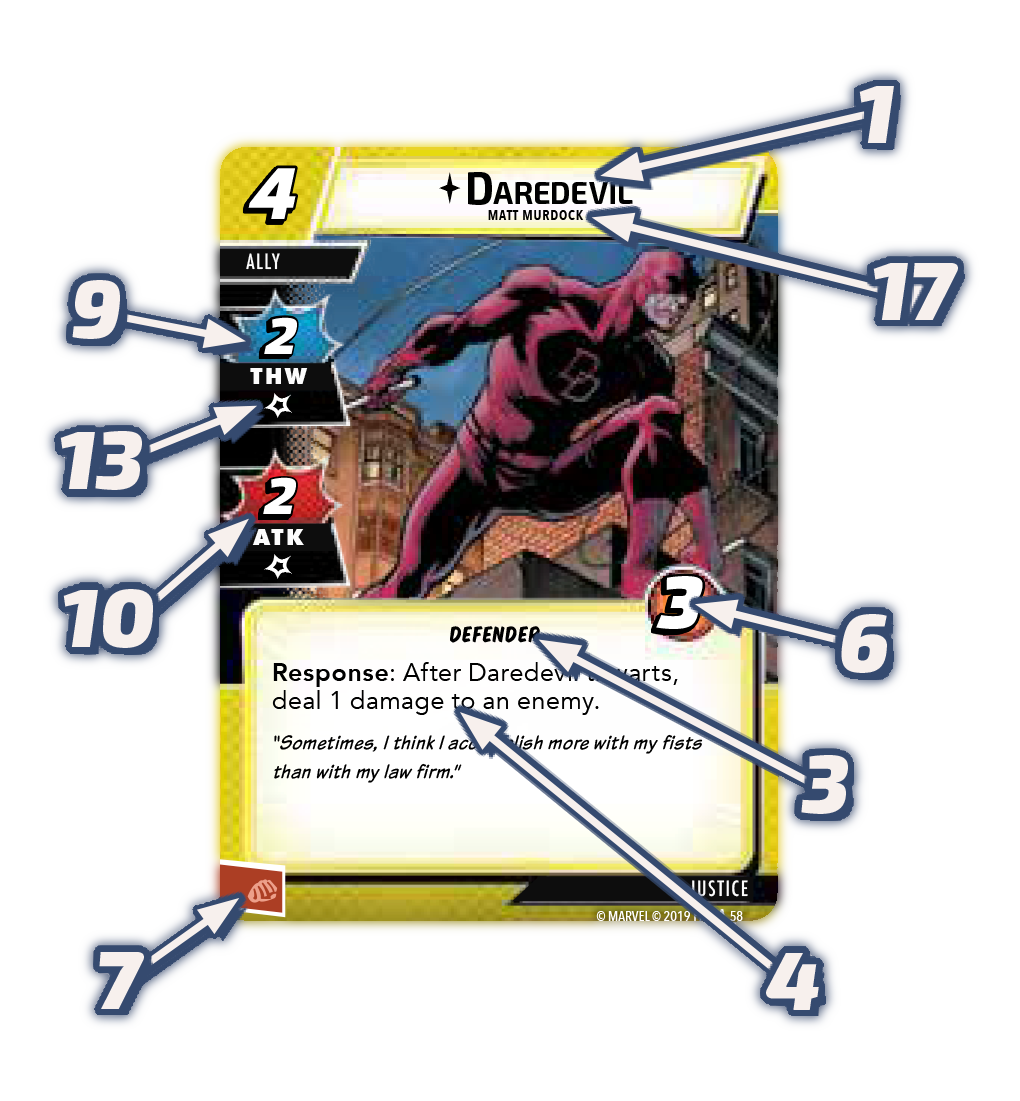
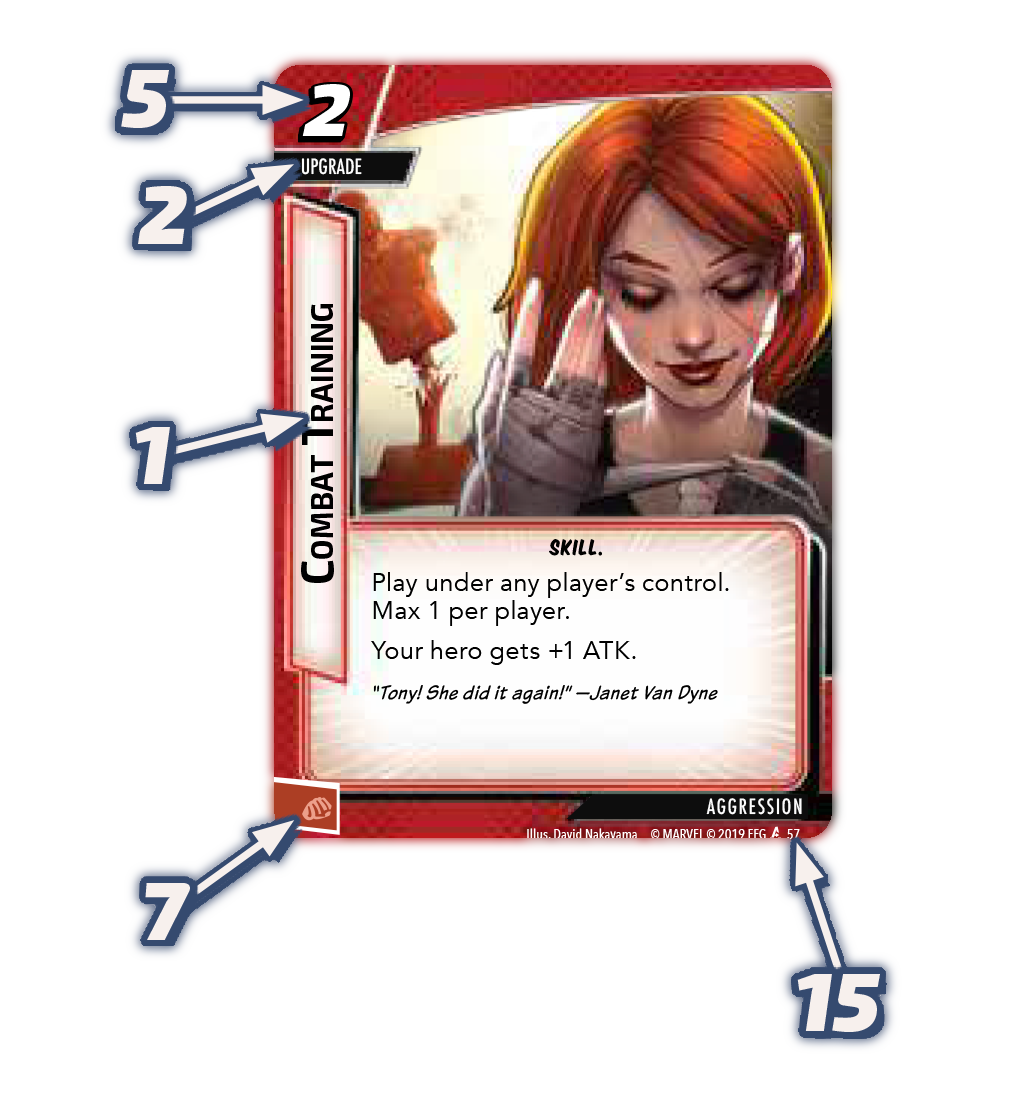
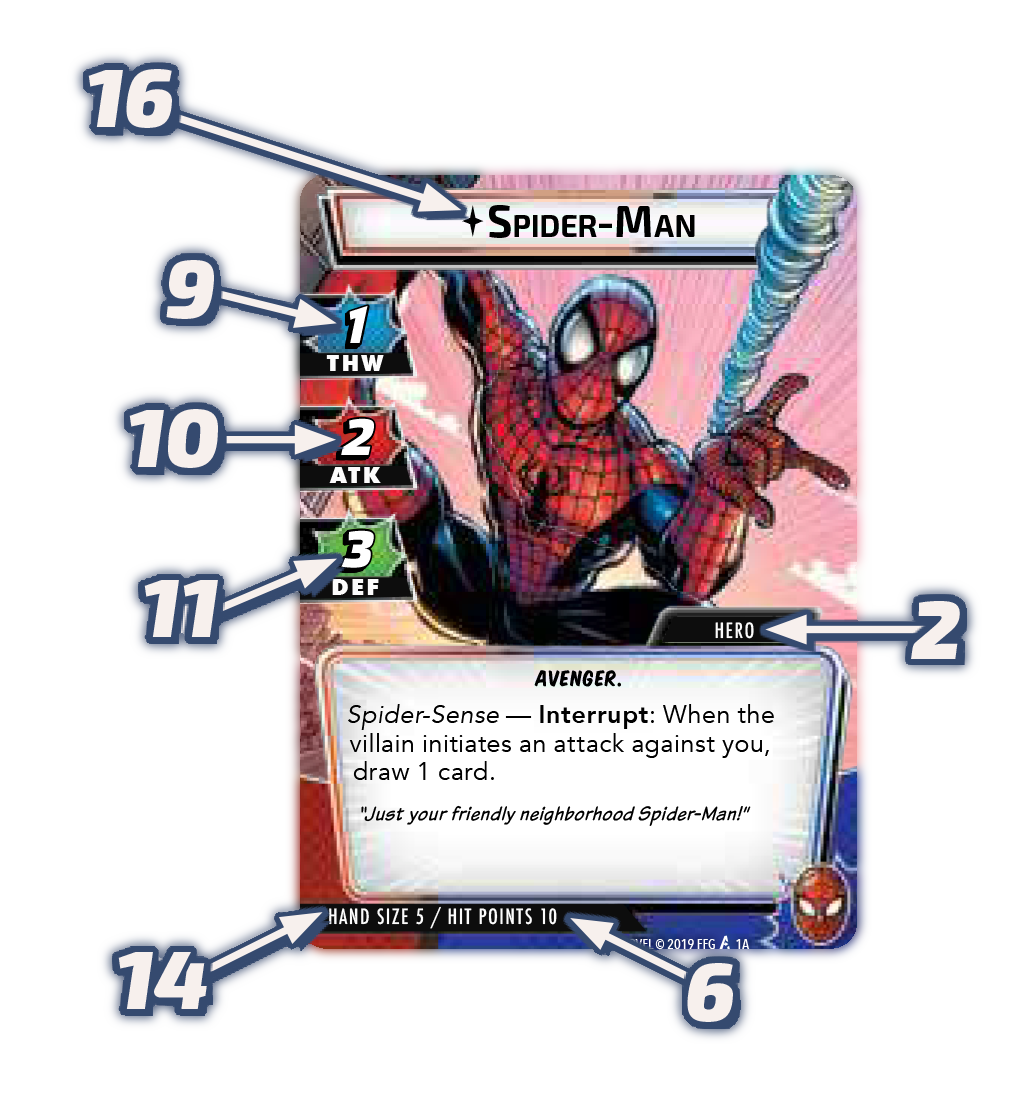
Player Card Anatomy Key
-
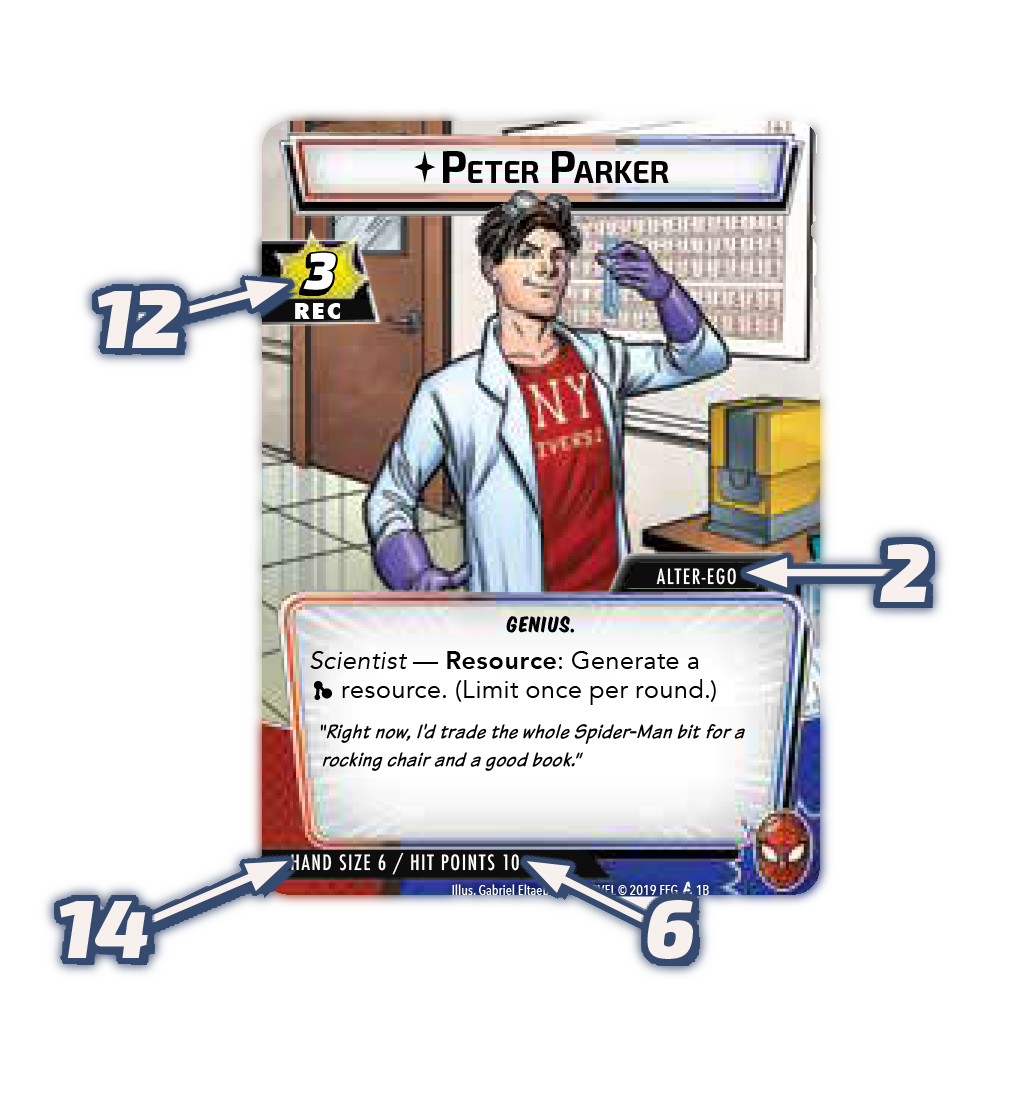
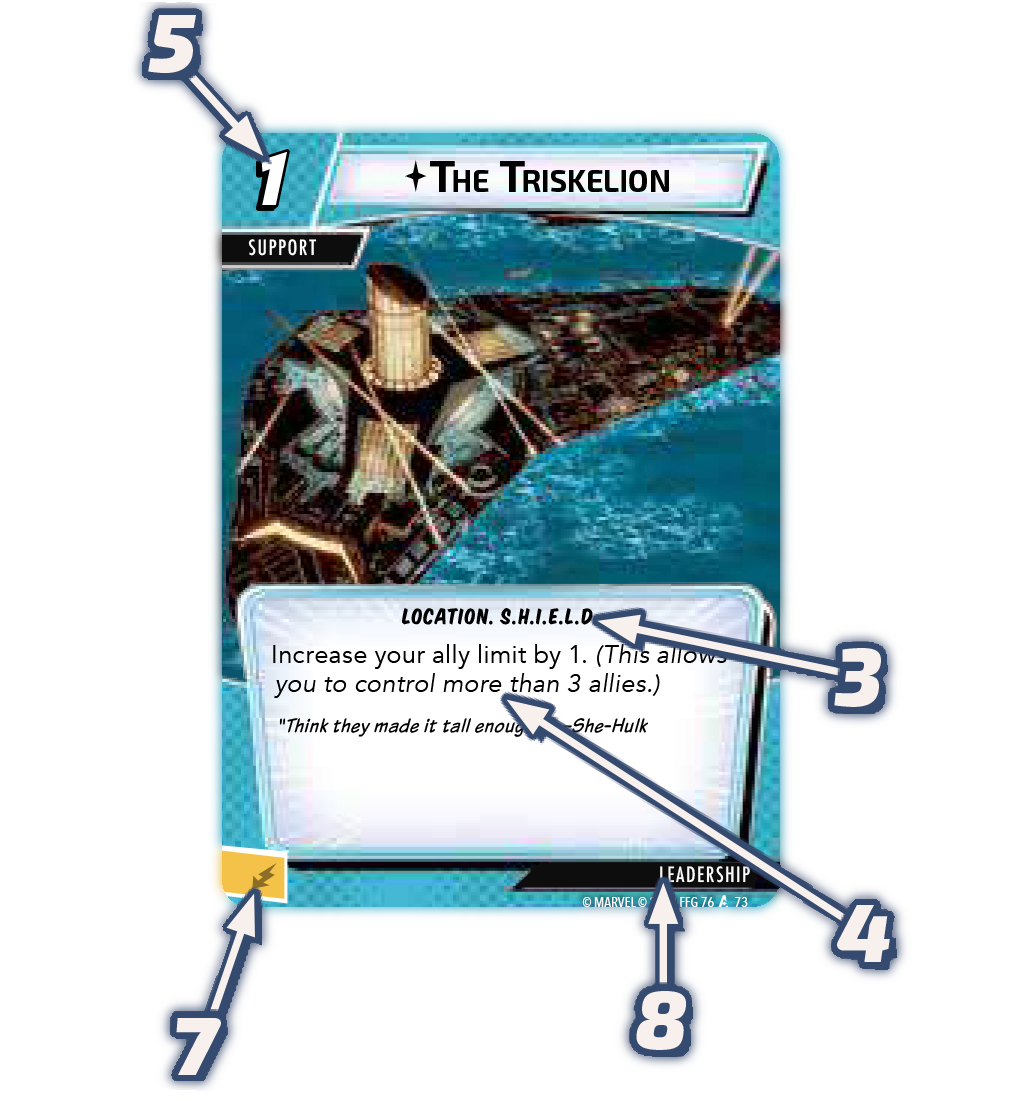
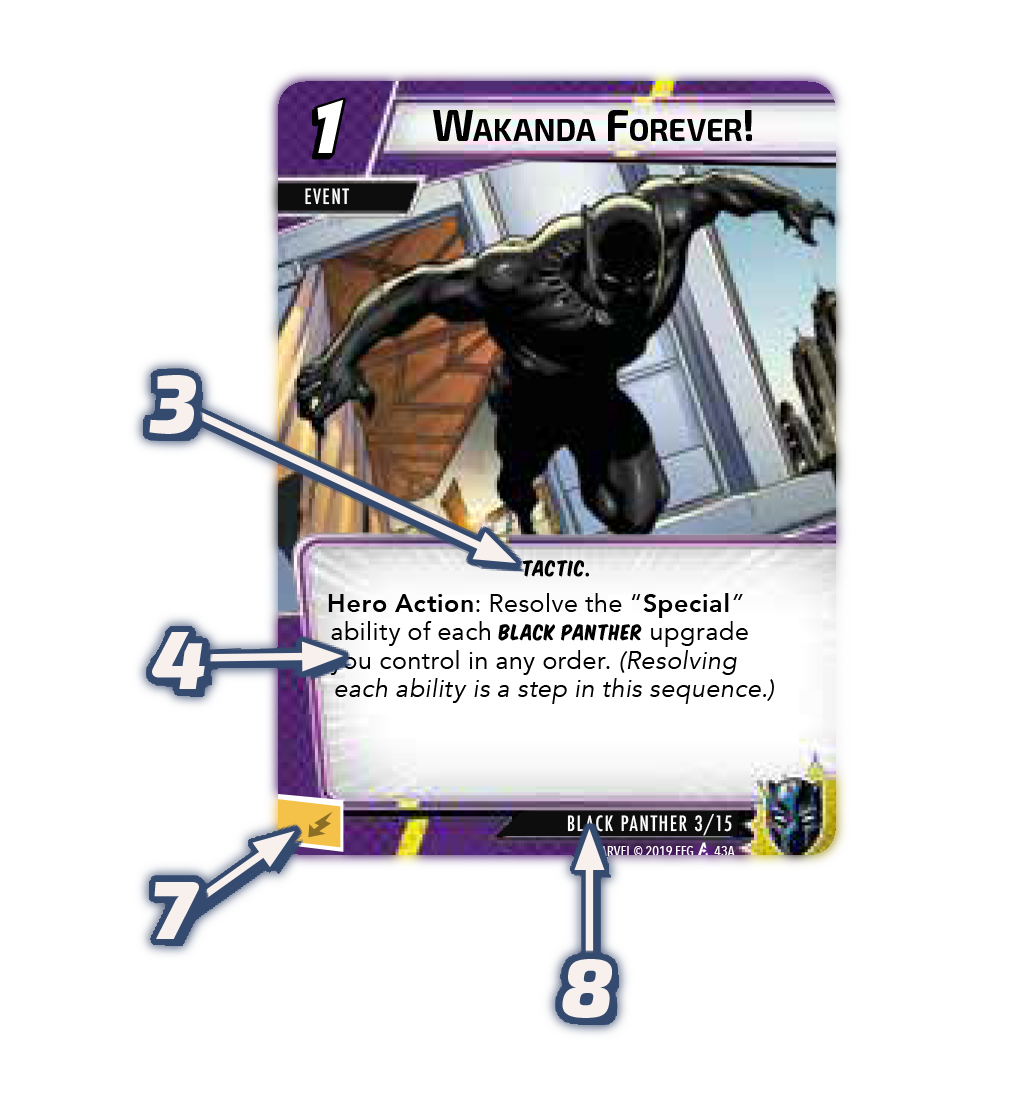
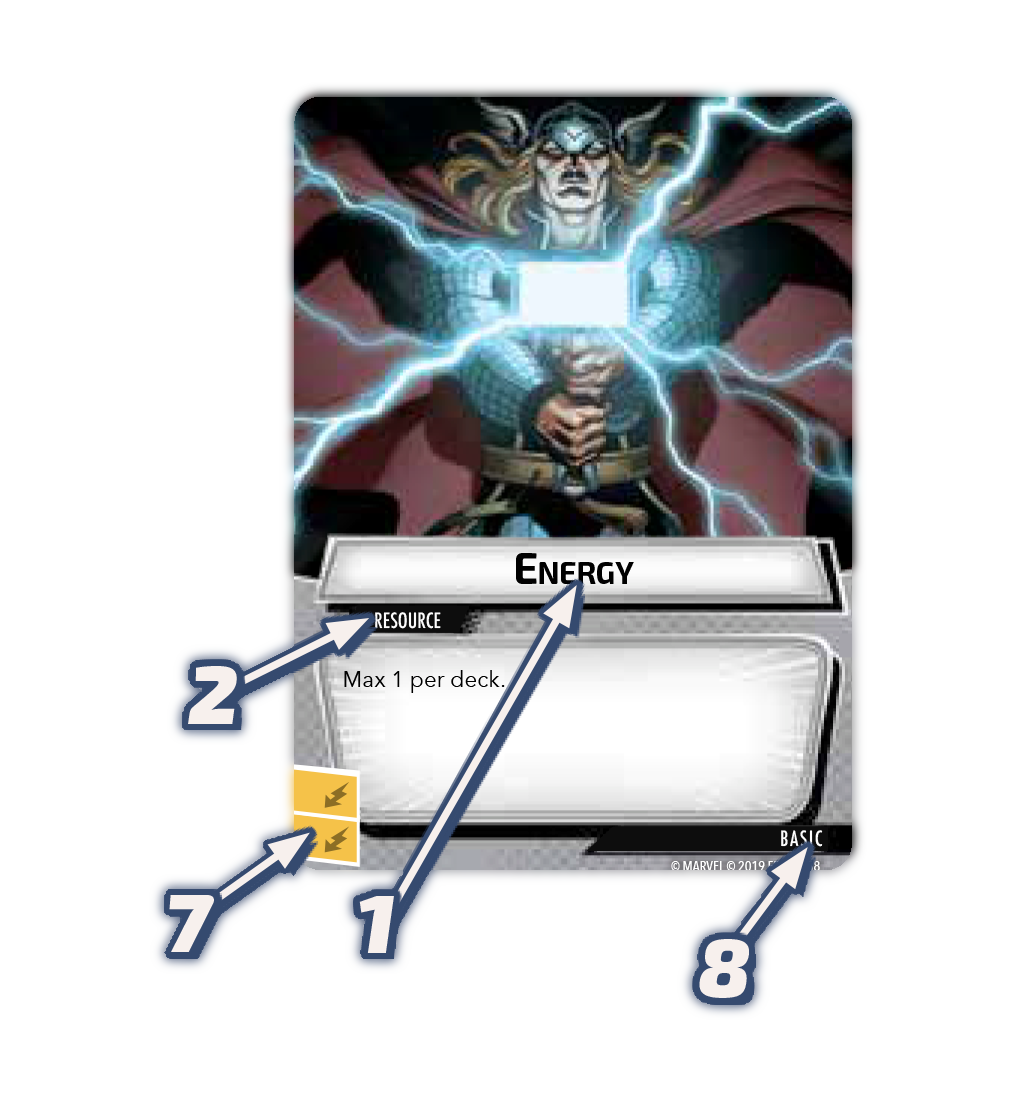
Title. The name of this card.
-
Card Type. Indicates how this card behaves or may be used in the game.
-
Traits. Flavorful attributes that may be referenced by card abilities.
-
Ability. This card’s specialized means of interacting with the game.
-
Cost. The resource cost to play this card.
-
Hit Points. A value that represents this card’s durability.
-
Resources. The resources this card generates when it is discarded from hand.
-
Deckbuilding Classification. Indicates if this card is exclusive to a hero, belongs to an aspect, or is a basic card.
-
THW. How effective this character is at opposing enemy schemes.
-
ATK. How effective this character is when it attacks.
-
DEF. How effective this character is when it defends.
-
REC. How effective this alter-ego is at recovering damage.
-
Consequential Damage. The amount of damage this ally takes after it is used for this power.
-
Hand Size. The number of cards this card’s controller resets their hand to each round.
-
Collector Information. Indicates this card’s product of origin (indicated by its set icon) and card number within that product.
-
Unique Icon. Indicates that the card is unique.
-
Subtitle. Indicates an alternate identity an ally might possess.
Encounter Card Anatomy Key
-
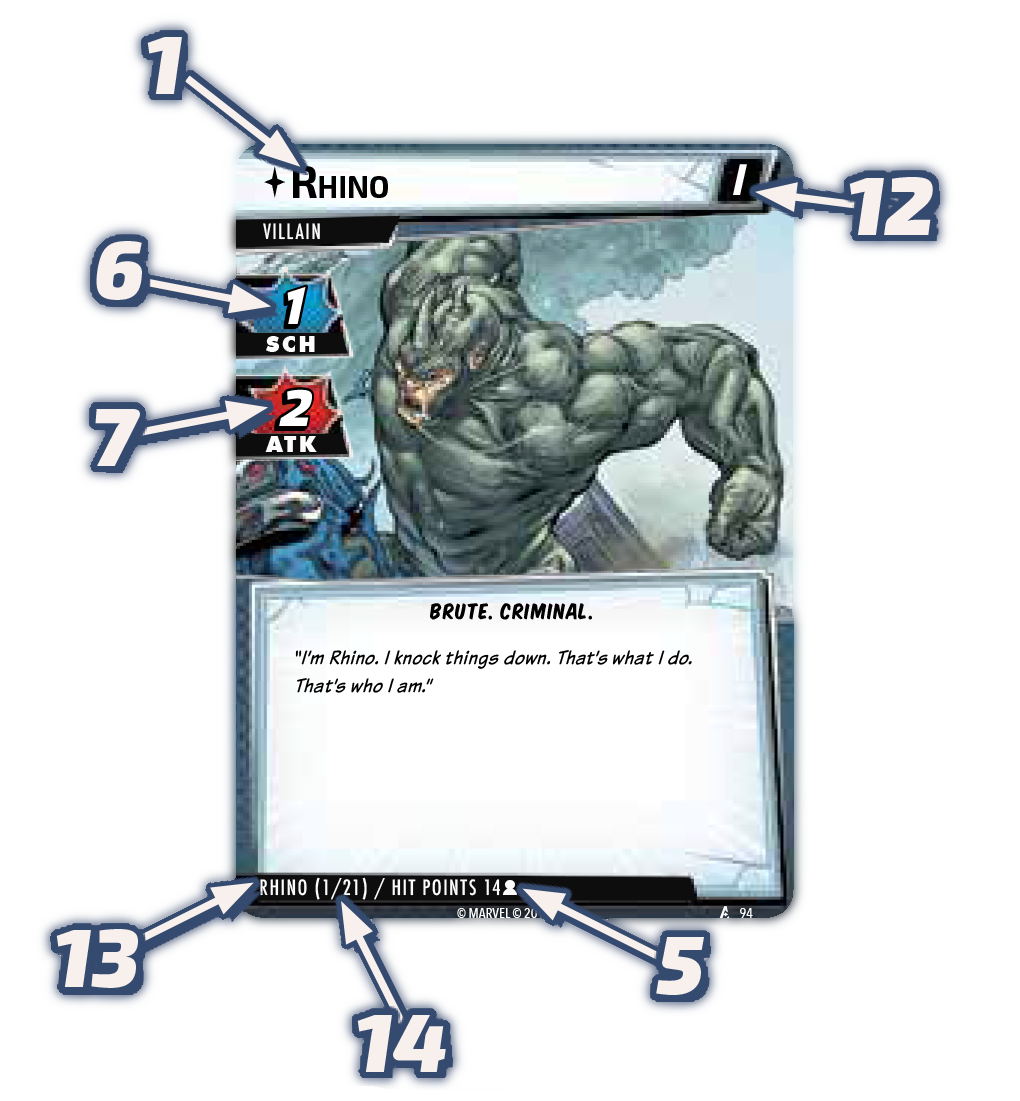
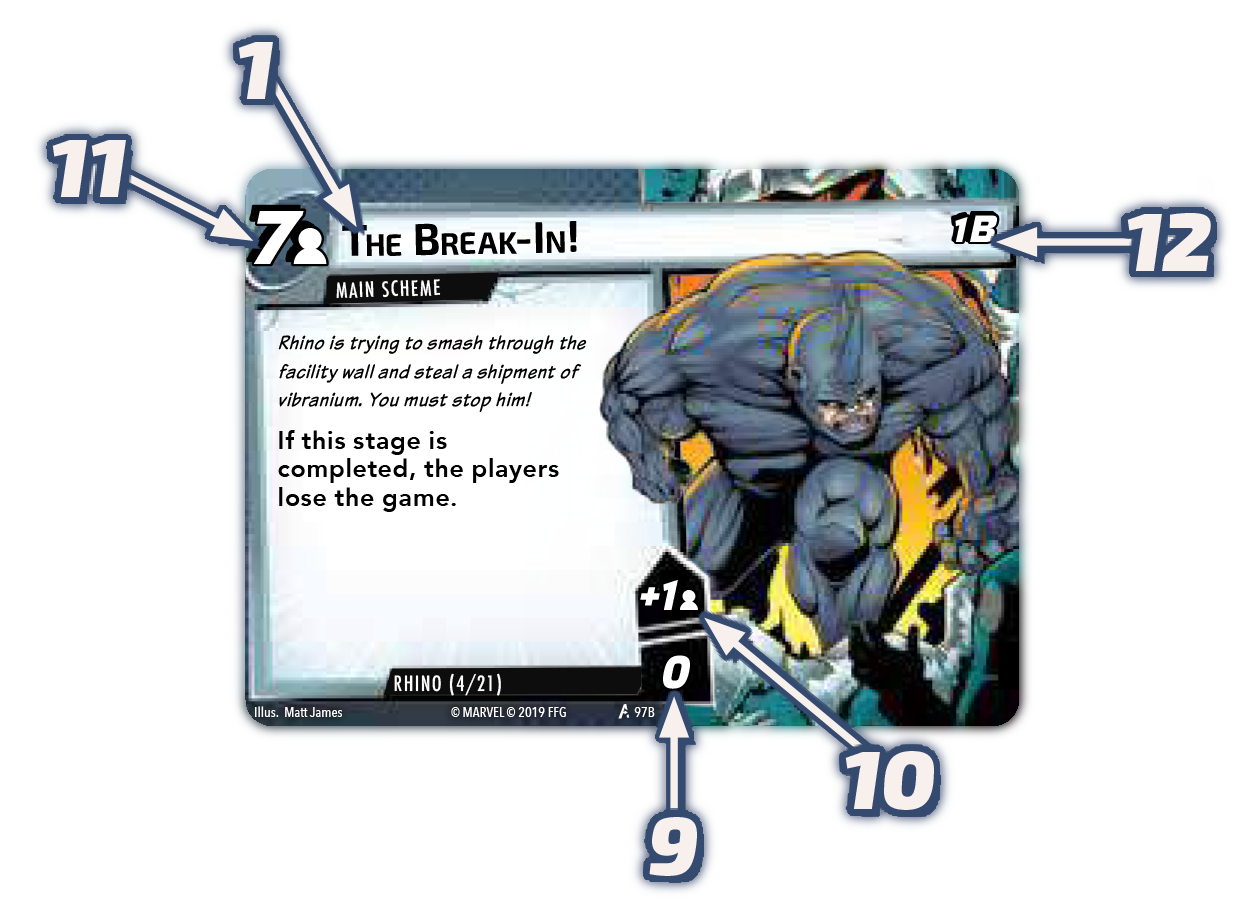
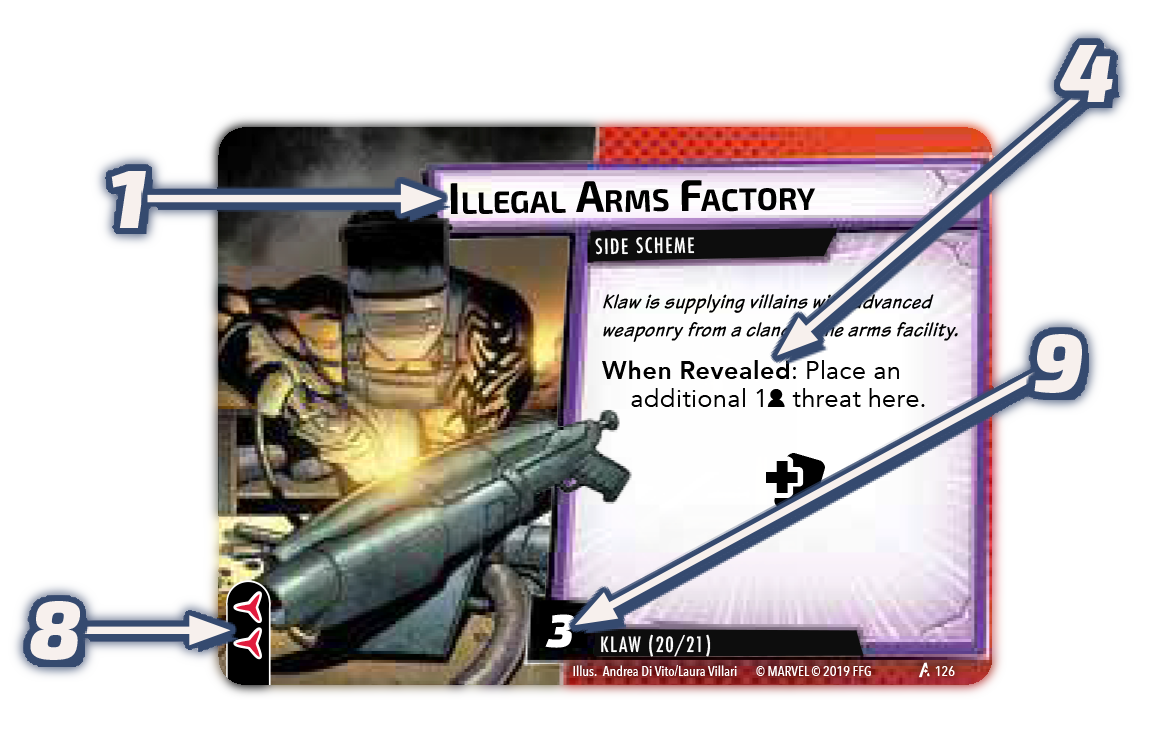
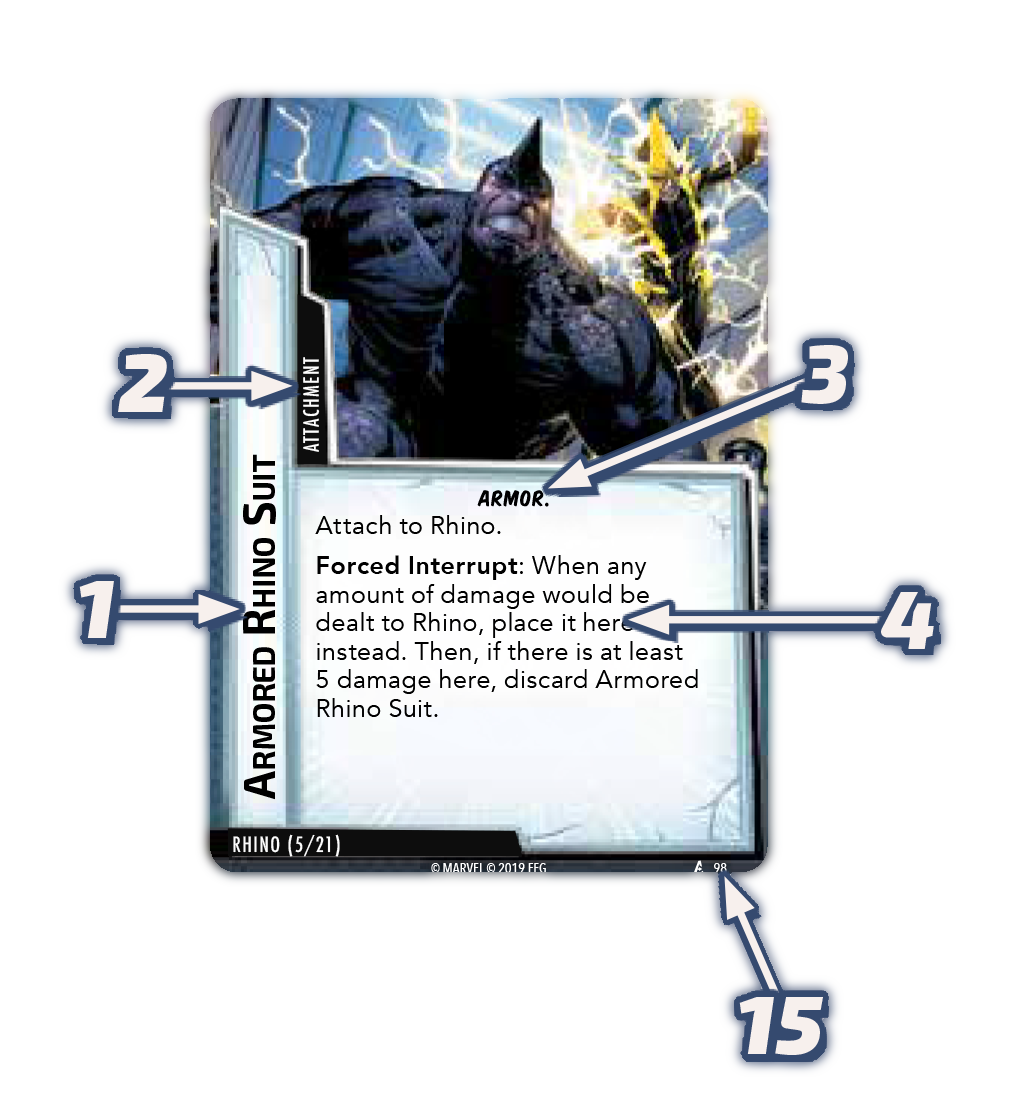
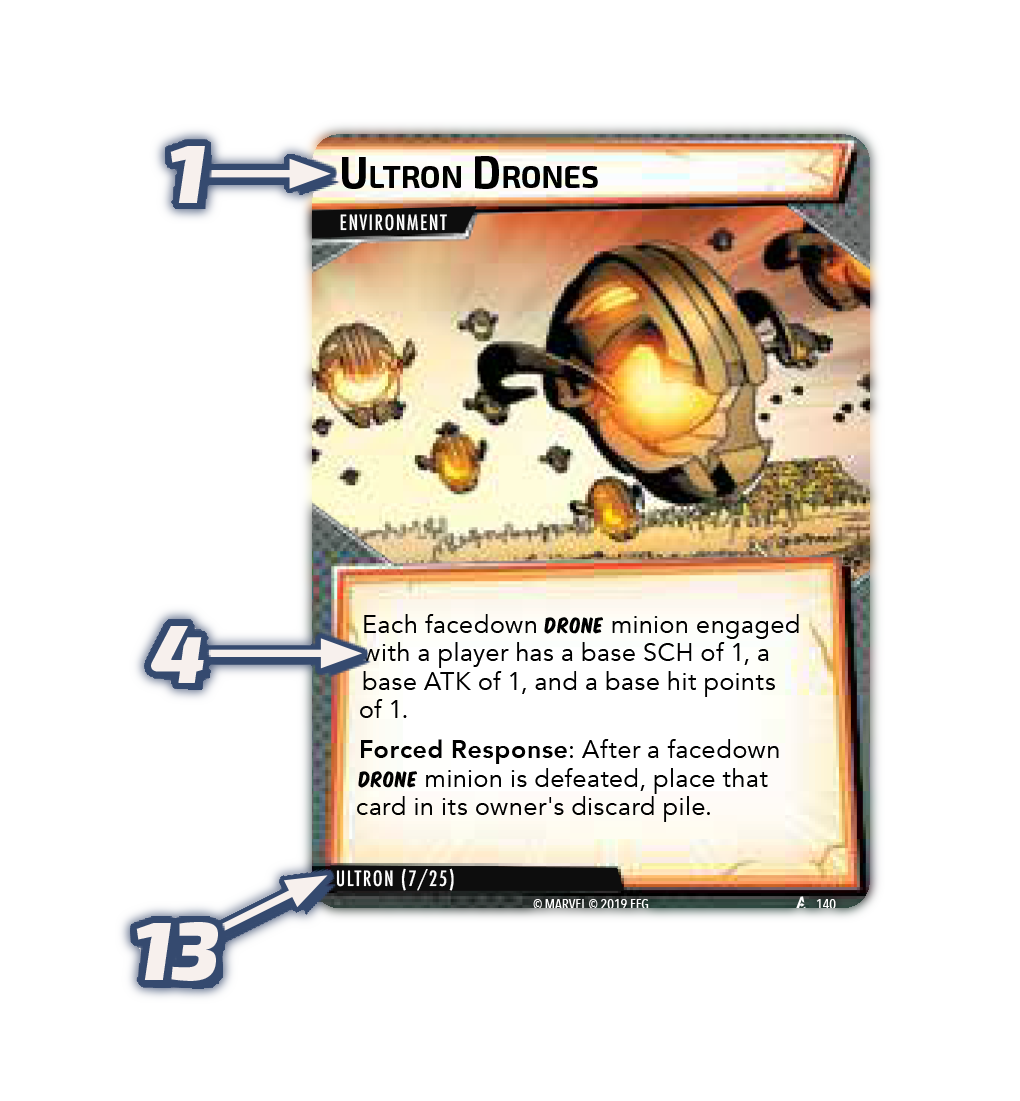
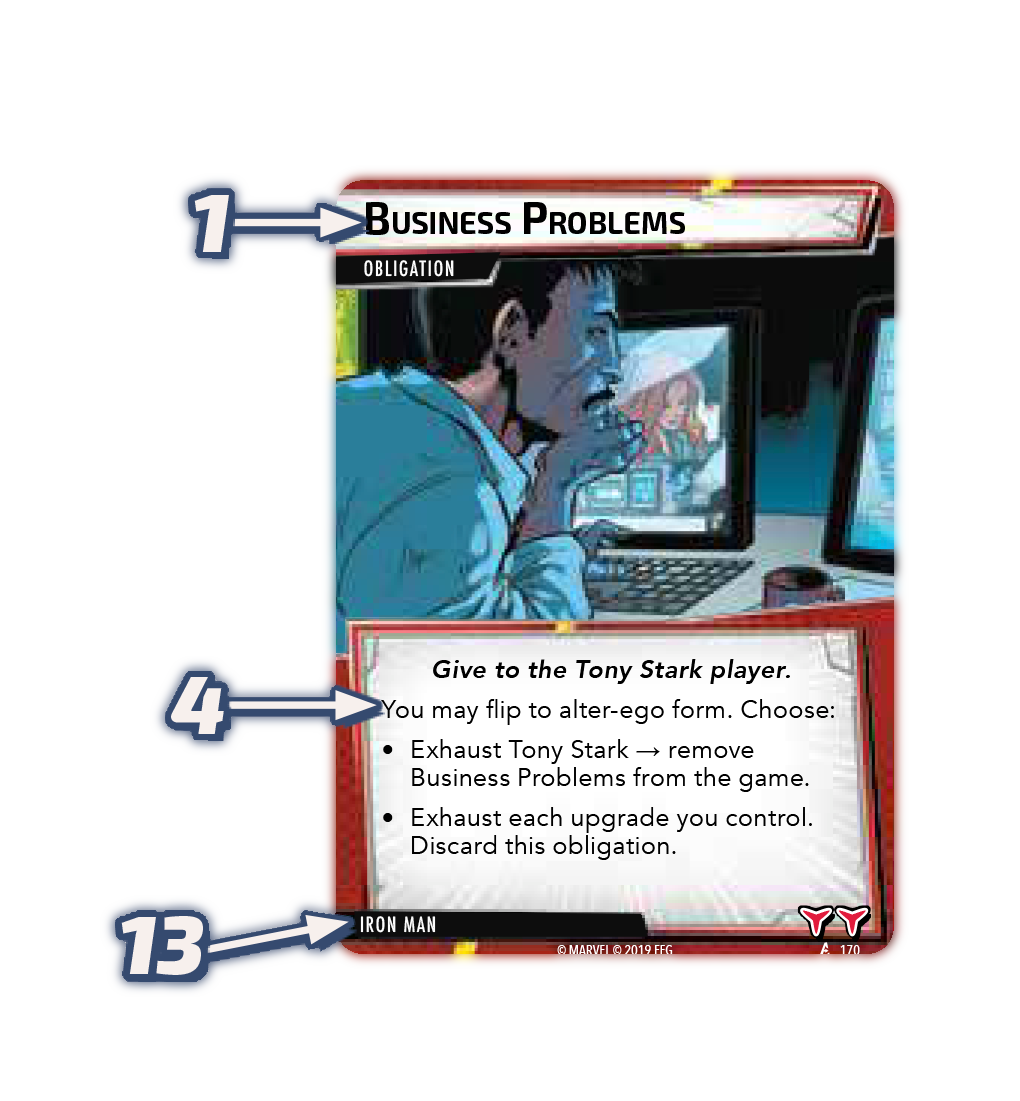
Title. The name of this card.
-
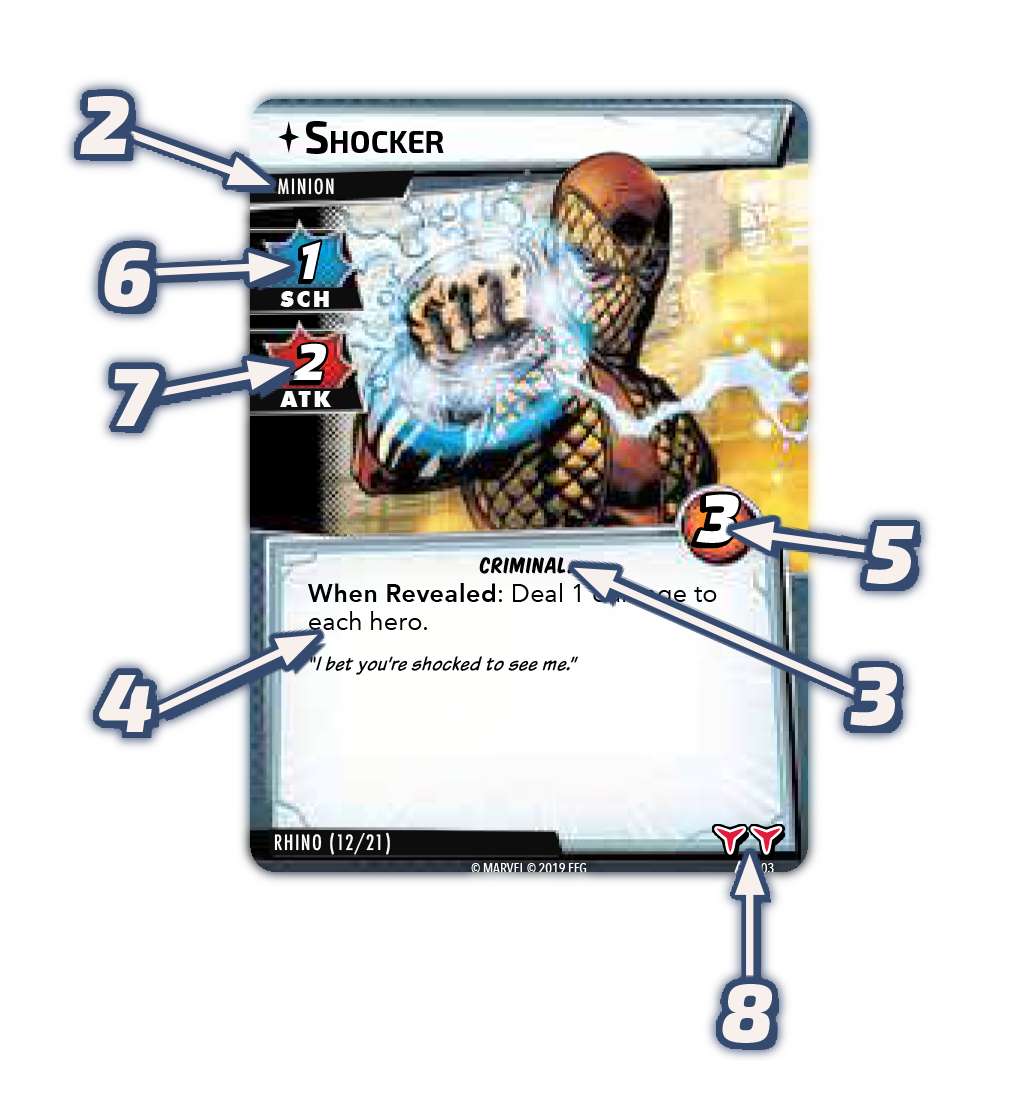
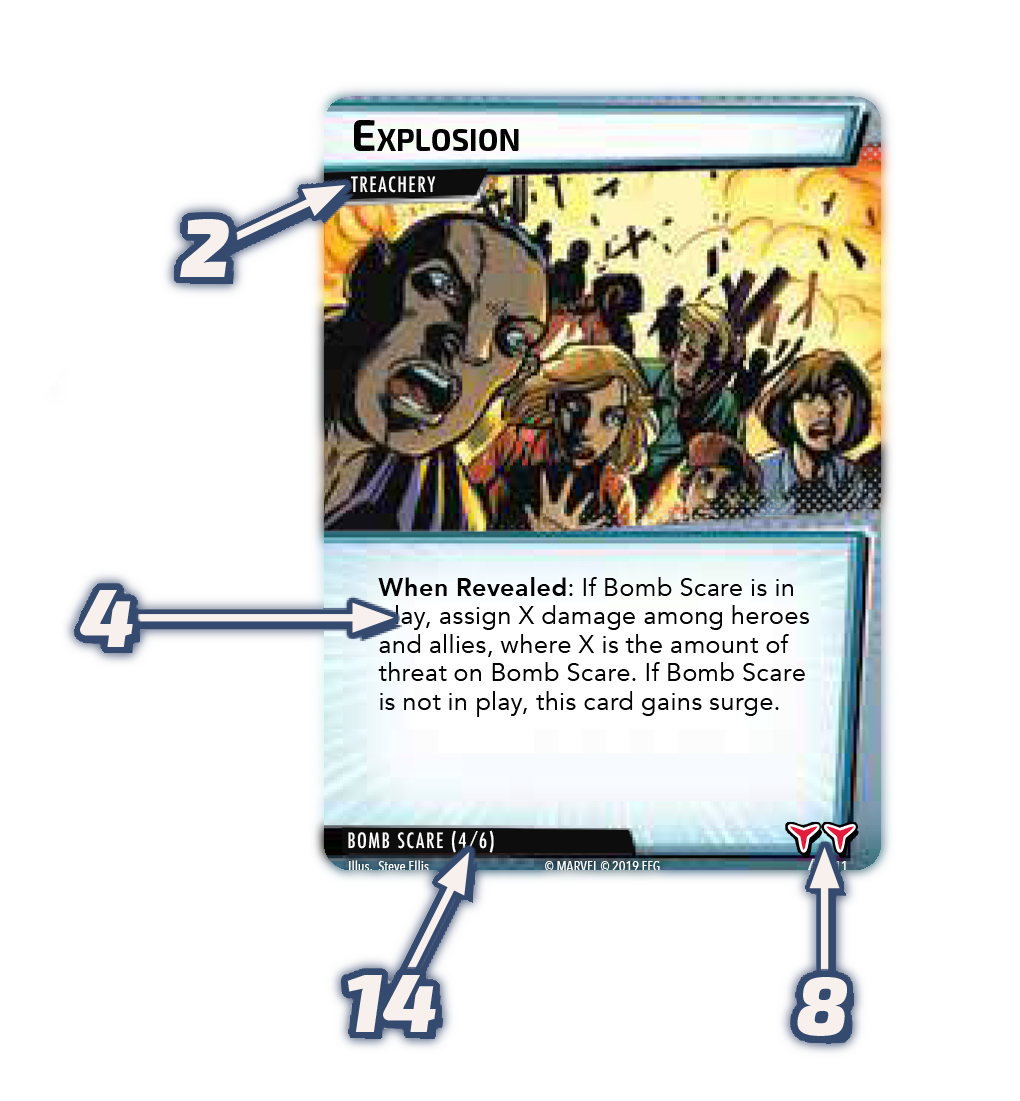
Card Type. Indicates how this card behaves or may be used in the game.
-
Traits. Flavorful attributes that may be referenced by card abilities.
-
Ability. This card’s specialized means of interacting with the game.
-
Hit Points. A value that represents this card’s durability.
-
SCH. How effective this enemy is when it schemes.
-
ATK. How effective this enemy is when it attacks.
-
Boost Icons. Indicates how effective this card is when it is discarded as an attack boost or scheme boost.
-
Starting Threat. The amount of threat placed on this scheme when it enters play.
-
Acceleration. The speed at which this scheme advances each round.
-
Target Threat. The amount of threat required on this scheme to advance to the next stage of this scheme deck.
-
Stage Number. The stage of this villain or scheme within the scenario.
-
Encounter Set Name. Indicates which encounter set this card belongs to.
-
Encounter Set Information. Indicates the number of cards within an encounter set and this card’s place within that set.
-
Collector Information. Indicates this card’s product of origin (indicated by its set icon) and card number within that product.
Card Backs
This page presents the different card backs used in the game.
The alternate player and encounter card backs are used for cards that are never shuffled into their respective decks to aid in identifying those cards.